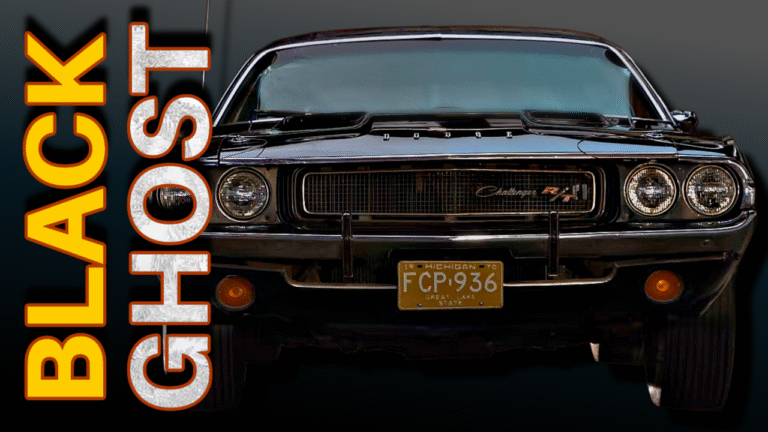
The Ghost on Woodward
In the summer of 1970, if you parked at the Sunoco on Woodward Avenue or lined up near the legendary Totem Pole drive-in outside Detroit, you knew the legend before you ever saw the car.
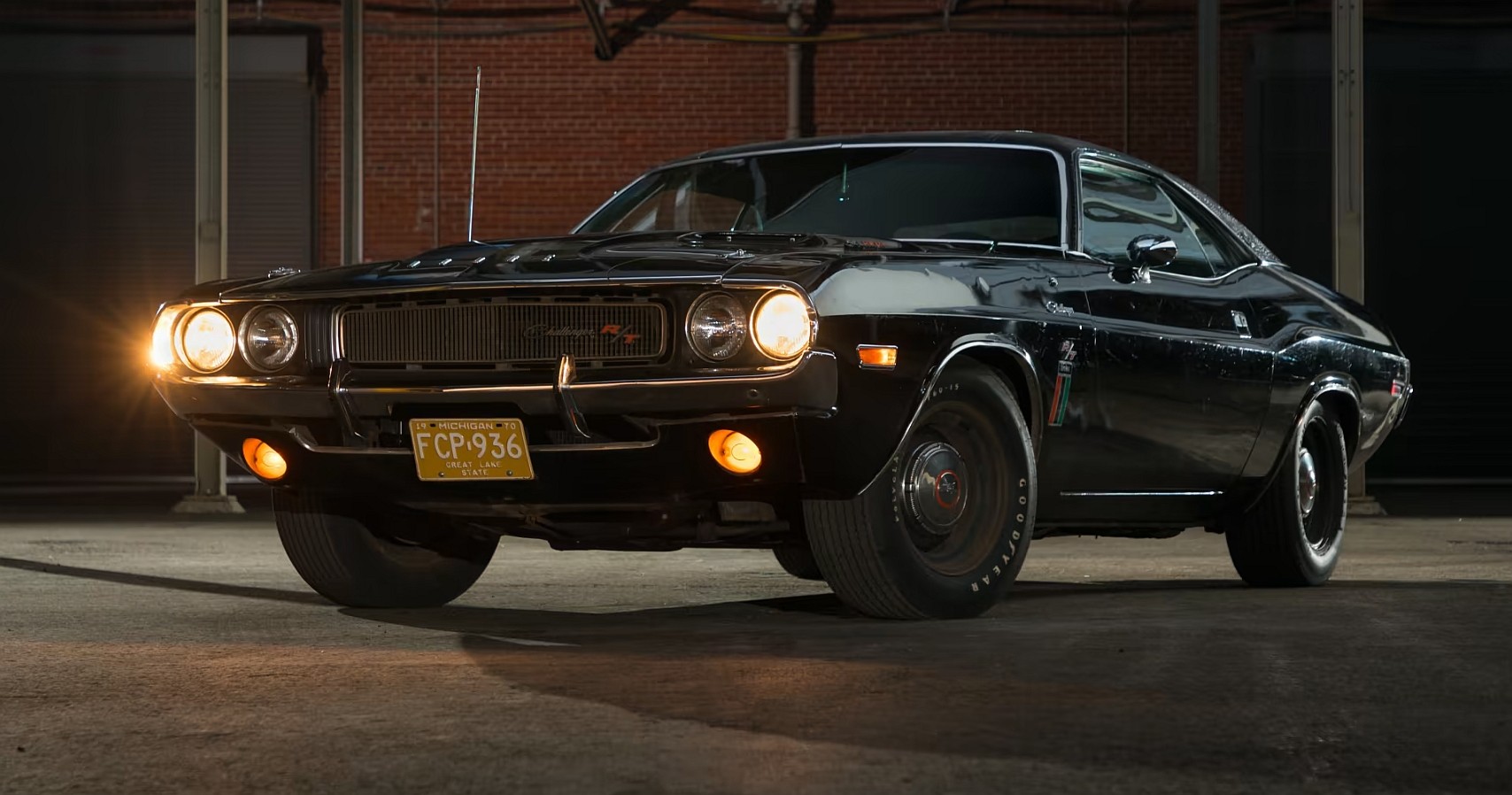
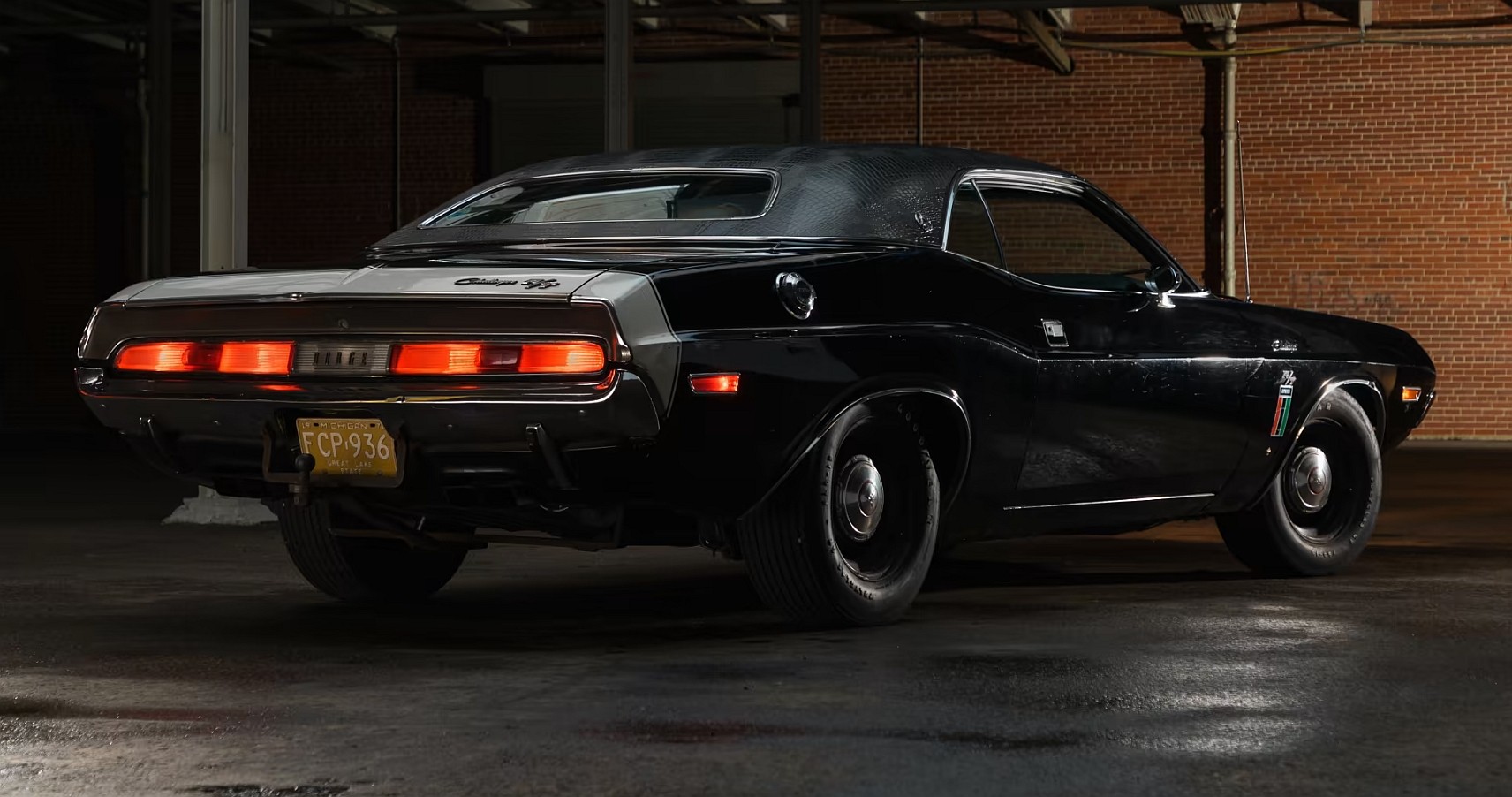
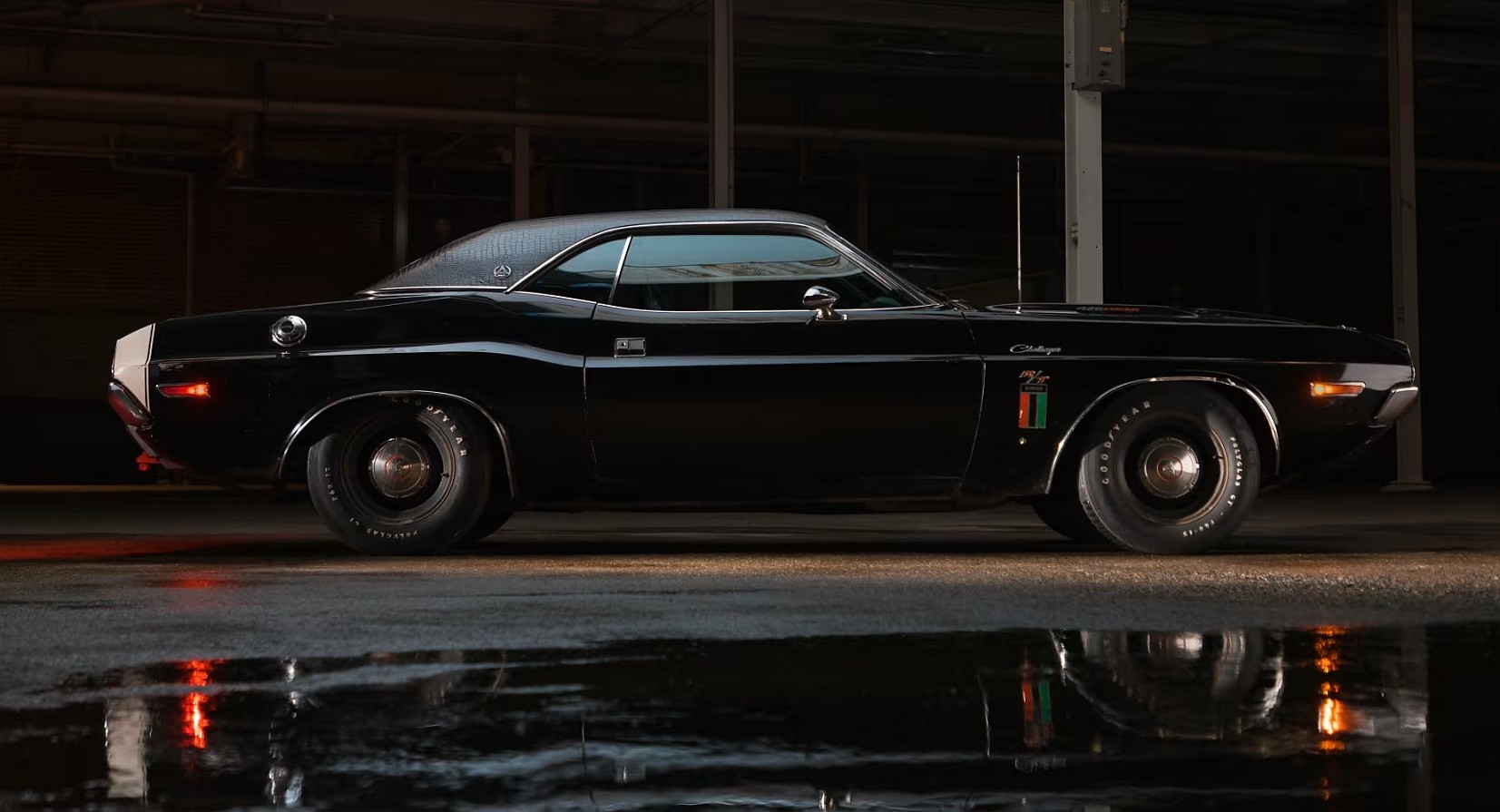
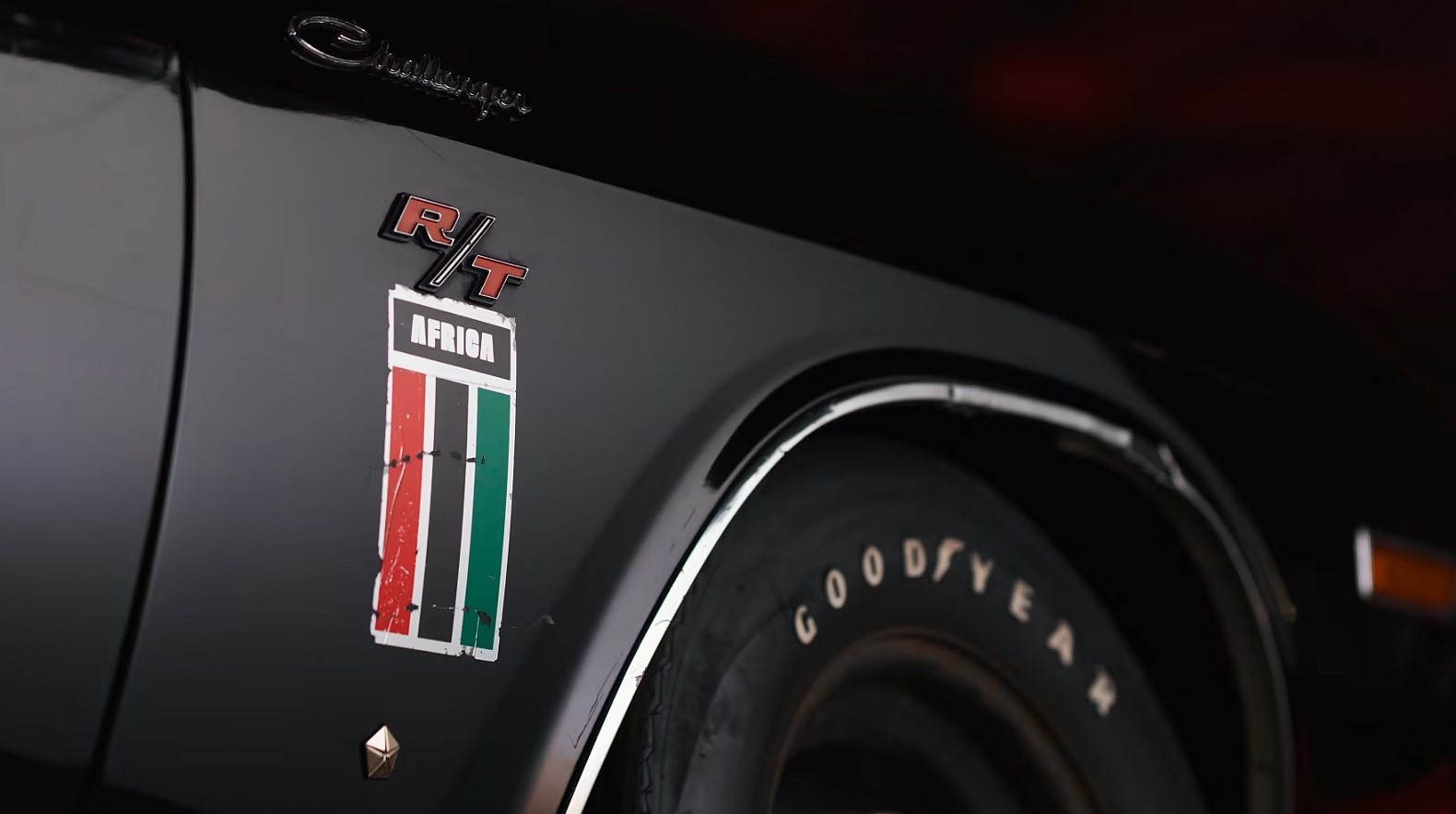
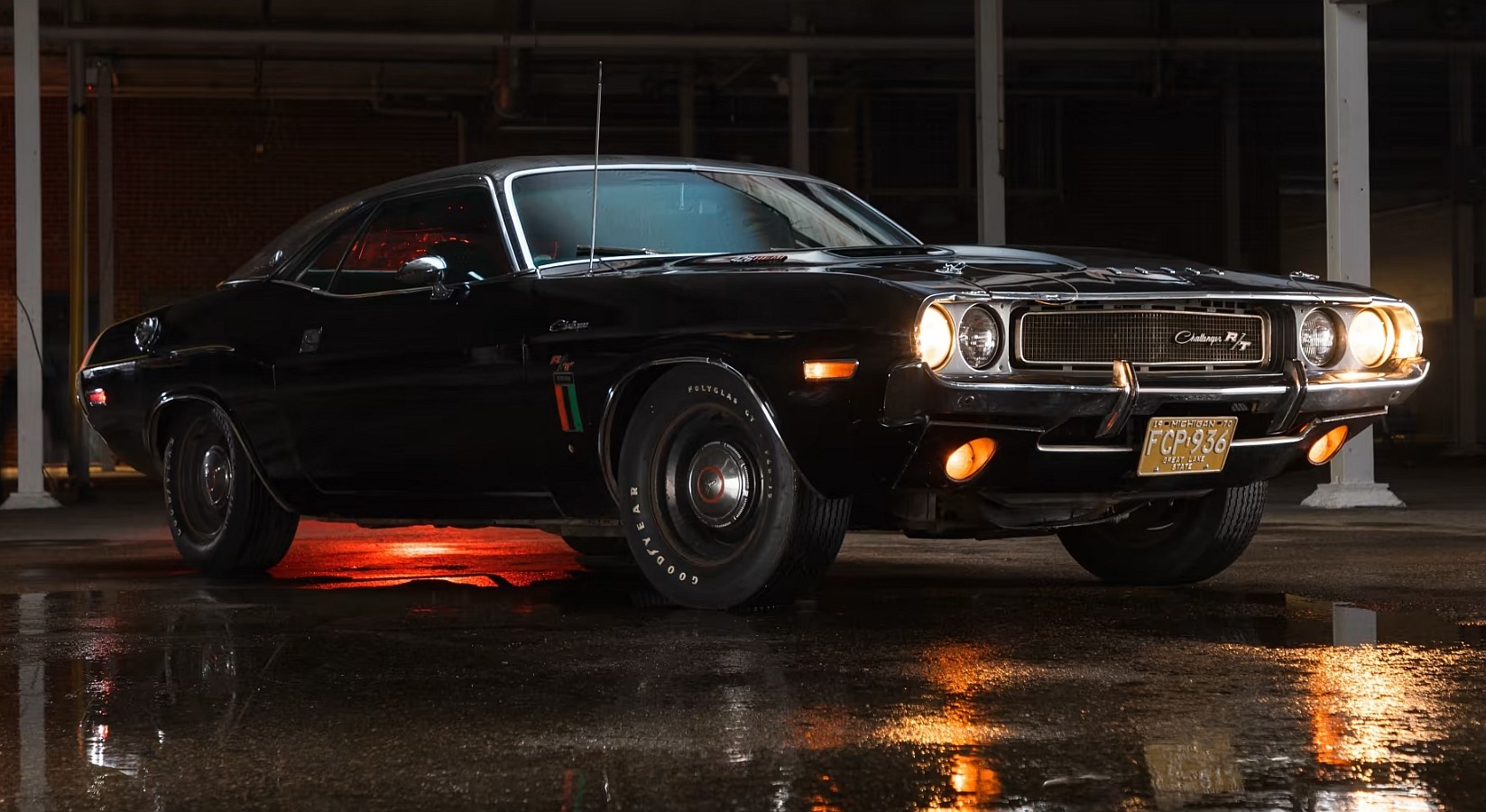
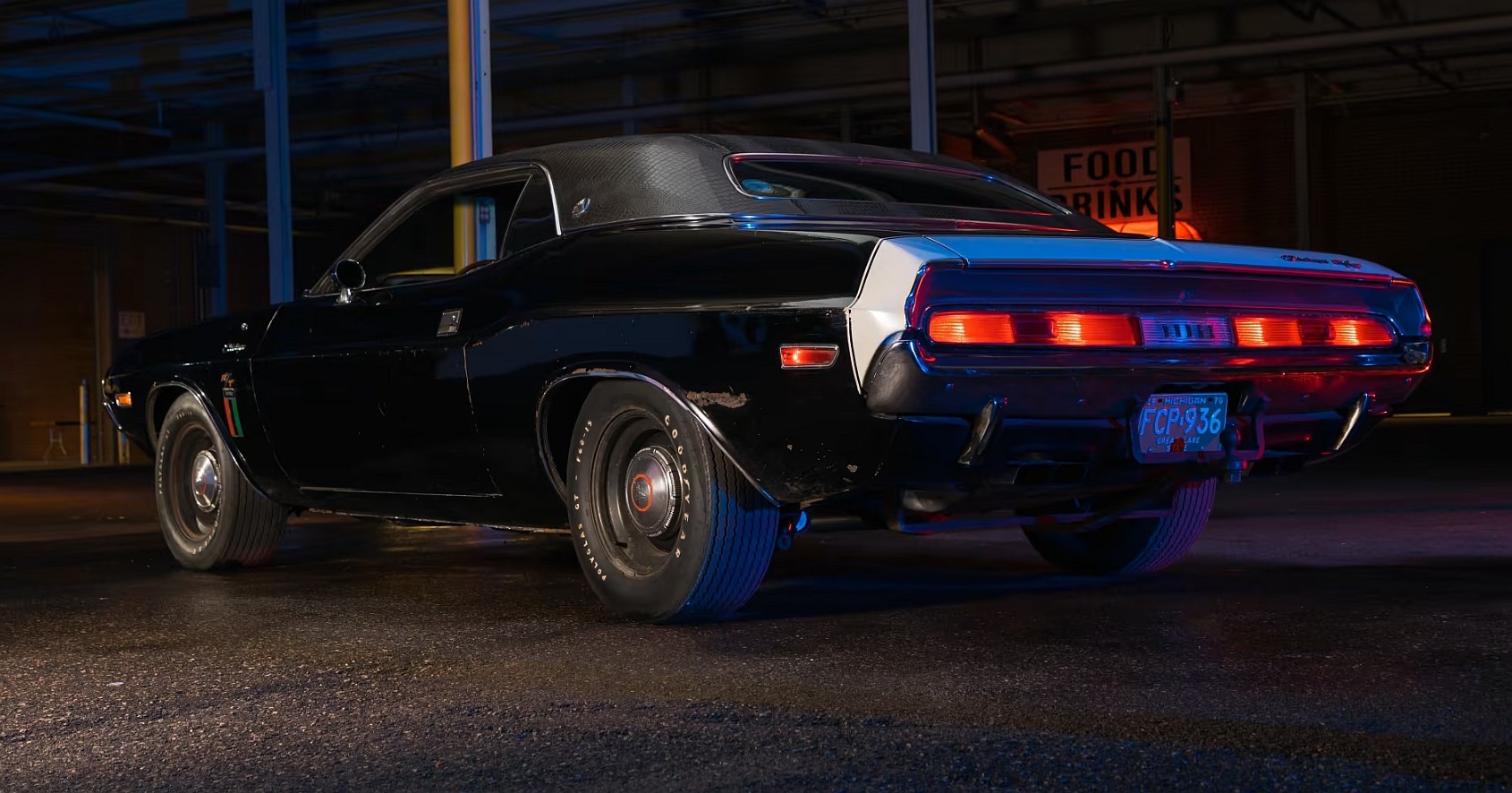
It only showed up after 2:00 in the morning. A triple-black Dodge Challenger R/T SE. Triple black, black wheels, no hubcaps, and a strange, textured alligator-grain vinyl roof. It would roll up to the line, drop into gear, and lay waste to every big-block Chevy and Ford on the strip for cash.
No tire-kicking. No small talk.
The driver never took off his jacket. He never rolled down his window more than two inches to take the bet. And the second the race was won and the bills were pocketed, the car vanished into the Detroit shadows—sometimes disappearing for three, six, or nine months at a time.
Locals on the street started calling it a phantom. The Black Ghost.
For over forty years, people thought it was pure urban folklore. A campfire story passed around car meets.
What the street racers never knew… was that the man behind the wheel had an oath to protect the very city he was terrorizing.
The Man Behind the Wheel
His name was Godfrey Qualls.
Godfrey was not your average kid looking for an adrenaline rush. He was an African American paratrooper in the Army’s 82nd Airborne Division, a combat-decorated Green Beret, and a man built on discipline and ice-cold composure. When he returned home to Detroit, he traded the combat boots for a uniform, joining the Detroit Police Department as a motorcycle traffic cop.
Now, think about the stakes here.
In 1969, Godfrey walked into Raynal Brothers Dodge on Chalmers Avenue in Detroit. He had a military check and a very specific order sheet. He didn’t build a stripped-out drag racer. He ordered a top-tier Challenger R/T with the Special Edition package. Leather bucket seats, overhead interior console, houndstooth accents, that unusual gator-grain top, and power windows.
Underneath that luxury trim? Pure violence.
He ticked the box for the 426 Street Hemi with dual four-barrel carburetors, backed by an A833 four-speed manual transmission with a Hurst pistol-grip shifter, the Super Track Pak, and a 4.10 Dana 60 rear axle.
It was one of only twenty-three four-speed Hemi R/T SE Challengers ever built for 1970.
A unicorn from day one. And its owner had a badge pinned to his chest.
By day, Officer Qualls patrolled the streets of Detroit on a Harley-Davidson, writing tickets and enforcing the law.
By night, Godfrey took off the uniform, slipped down into his garage, and backed the Challenger into the cool Michigan air.
He had a few modifications that weren’t in the factory manual. He installed a trailer hitch on the back of the Challenger—not to haul a boat, but to tow his Harley out to drag strips. He wired up a hidden, custom kill switch to his taillights so he could run completely dark down side streets.
When he pulled up to the illegal street races on Woodward or Telegraph Road, he had everything to lose. If an officer caught him, it wasn’t just a ticket. It was a court-martial of his civilian career: fired from the force, badge stripped, pension revoked, and real jail time.
That’s why the Ghost had rules.
He’d roll up on a 454 Chevelle or a Boss 429 Mustang. He’d tap the throttle, let the 426 Hemi clear its throat, and take the bet. Second gear would hit, the Dana 60 would bite, and the Hemi would pull away like a runaway freight train.
The moment he crossed the finish line and collected his envelope, Godfrey didn’t hang around to soak in the glory. He killed the lights, took a hard turn down an industrial side alley, and slipped into the night.
By the time the sirens echoed in the distance, the Black Ghost was already tucked behind his closed garage door, cooling down in the dark.
For five years, Godfrey ruled the pavement. Then, around 1975, the visits stopped cold.
No dramatic crash. No police chase.
Godfrey got called back into active military service, this time with the Army Reserve. When he returned to the police department, life shifted. Family took priority. Street racing was getting reckless, the crackdowns were severe, and Godfrey knew the golden rule of outlaw mechanics: you never press your luck twice.
He pulled the Challenger into his family garage, pulled the emergency brake, and shut off the ignition.
For the next thirty-five years, the car didn’t turn a wheel.
Boxes were stacked on the roof. Bicycles leaned against the rear quarters. The neighborhood kids walked by the house every single day, having no clue that behind that wooden garage door sat the mythical boogeyman that humiliated their fathers on Woodward Avenue decades earlier.
Godfrey’s son, Gregory, grew up washing that garage floor. He knew his dad had a car under the blankets, but Godfrey rarely spoke about the races. It was a closed chapter in a locked ledger.
The Resurfacing & The $1 Million Gavel
In 2014, Godfrey Qualls was diagnosed with cancer.
Knowing his time was short, he called Gregory out to the garage. He had his son pull down the boxes, sweep off the dust, and for the first time in nearly four decades, Godfrey handed over the keys.
His only rule to his son was simple: “Keep it original. Don’t paint over the life we lived.”
Godfrey passed away in December 2015.
When Gregory finally pulled the car out into the daylight, preserved its scratches, its original interior, and every single stone chip from those 2:00 AM dogfights, the automotive world went into shock. The urban legend was real.
In 2020, the Library of Congress and the Historic Vehicle Association officially added the Black Ghost to the National Historic Vehicle Register—joining the Shelby Cobra Daytona prototype and the Apollo 15 Lunar Rover as an untouchable piece of American history.
And in 2023, when the gavel fell at Mecum Auctions, this unrestored, dirt-in-the-creases Detroit street brawler crossed the block for $1,072,500.
Not bad for a ghost that wasn’t supposed to exist.
Godfrey Qualls didn’t build a show queen. He built a weapon, ran it in the dark, and walked away before the world ever caught him.
Tell me in the comments: If you had a 426 Hemi tucked in your garage today, are you keeping it preserved under a cover, or are you taking it down Woodward at 2:00 in the morning?
SHOP THE ETSY STORE

Tess Drive YouTube Channel

“Follow us on Pinterest for vintage rides, garage vibes, and Relic heritage designs.”
