“Who the is Don Yenko, and why did this gold Camaro just sell for nearly two million dollars? By the time we shut the motor off, you’re gonna know. He wanted to go fast, under their noses.
“Who the hell is Don Yenko, and why did this gold Camaro just sell for nearly two million dollars?
By the time we shut the motor off, you’re gonna know.
See, back in sixty-nine, the big shots up in Detroit told everybody you couldn’t put a big motor in a little car. They said four hundred inches was the limit, end of story.
Don Yenko thought that was pure bullshit.
He didn’t give a damn about what the front office said. He wanted to go fast, and he wanted to beat Ford’s ass on the street. So he figured out how to build the meanest small-block-hunting monster on the planet right under their noses.
Get in. Let’s wind it out and see what the hell he did.”
Who is Yenko and why is this car almost worth 2 million dollars by the end you will know what you are talking about. Let’s drive it fast and see what it is about.
“In 1969, General Motors had a strict company edict handed down from the 14th floor: no mid-sized passenger car was allowed to have an engine bigger than 400 cubic inches. Period.
The corporate bean counters said it was an insurance hazard. They said ordinary folks would kill themselves. What they really meant was they wanted you buying a heavy, polite family sedan while Carroll Shelby and Chrysler beat the living hell out of Chevrolet on every drag strip in the country.
Most dealership managers looked at that memo, sighed, and went back to selling six-cylinder grocery-getters.
Don Yenko looked at it and decided the suits in Detroit didn’t know a damn thing about horsepower.
See, Don wasn’t a car salesman in a shiny suit. He was a road racer out of Canonsburg, Pennsylvania. He was a guy who bled on cylinder heads and knew that when a Mustang lined up next to a Camaro at a red light, nobody gave a damn about GM corporate policy. You either won, or you went home looking like a fool.
Back in ’67, when the Camaro first rolled out, Chevy brought a butter knife to a bar fight. Their biggest factory motor was a 396. It wasn’t enough. So Don did what any red-blooded outlaw mechanic does when the factory won’t build what he needs: he built it behind their back.
He ordered brand-new 396 Camaros straight from the assembly line. The transport trucks would drop them off in Canonsburg, Don would back them into the service bays, and his crew would immediately rip those factory engines out and shove them into a corner of the shop. Then he picked up the phone, ordered solid-lifter L72 427 Corvette crate engines, and dropped them between the fenders by hand. He bolted on heavy-duty front springs, slapped in Stewart-Warner tachometers, and welded on traction bars so the rear tires wouldn’t tear themselves off the axle.
He didn’t ask Detroit for permission. And he sure as hell didn’t ask for forgiveness.
He wasn’t the only lunatic turning wrenches in the dark, either. Over in Chicago, Nickey Chevrolet was doing the exact same thing, slapping their backwards ‘K’ badges on 427s. Out on Long Island, Baldwin-Motion was building cars so violent they came with a written guarantee you’d run eleven-second quarter miles or get your money back. Dana Chevrolet was doing it in California. It was an outright mutiny, and the dealerships were running the war.
By 1969, Don got tired of swapping iron by hand. It was too slow, and his knuckles were tired. So he did something Smokey Yunick would have respected to his core: he studied the paperwork until he found the loophole.
General Motors had a backdoor ordering system called COPO—Central Office Production Order. It was meant for fleet managers who needed fifty municipal taxicabs with heavy vinyl seats, or state police pursuit cars with severe-duty brakes. Nobody in the front office ever expected a backwoods racer to weaponize it.
Don figured out the internal codes and slipped in an order for COPO 9561.
He tricked the Norwood, Ohio assembly line into doing his dirty work for him. When the transport trucks pulled up to Pennsylvania in 1969, the Camaros rolled off the ramps with factory-stamped, 425-horsepower 427s already sitting between the frame rails. The biggest car company on earth had just built an outlaw street racer, and the executives on the 14th floor didn’t even realize they’d signed off on it until the cars were already burning rubber out of the showroom.
Only 201 of those cars ever left Yenko’s lot in 1969.
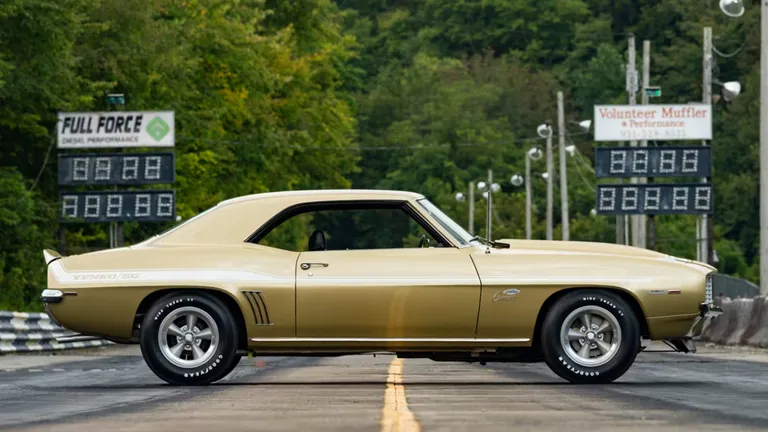
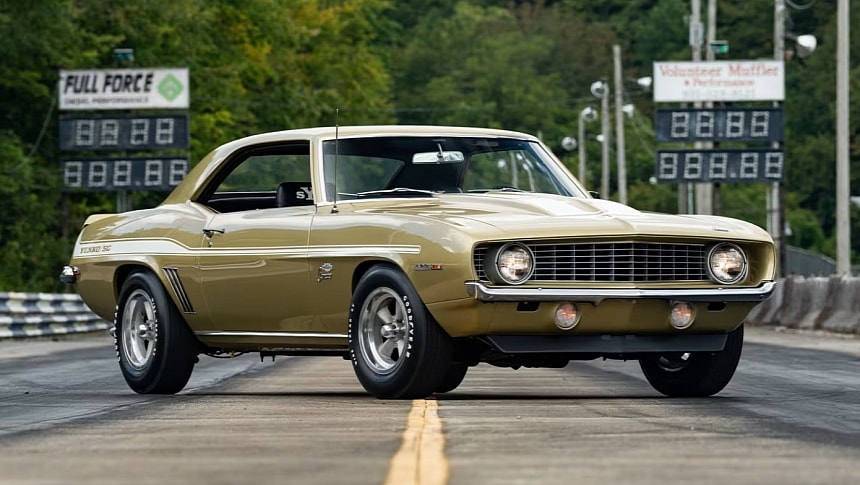
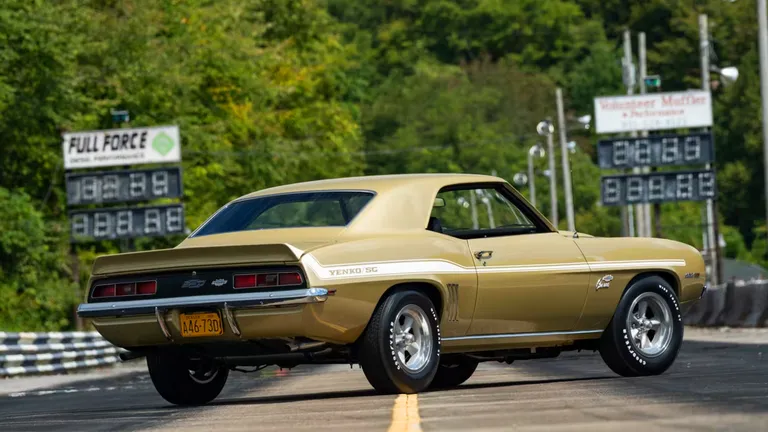
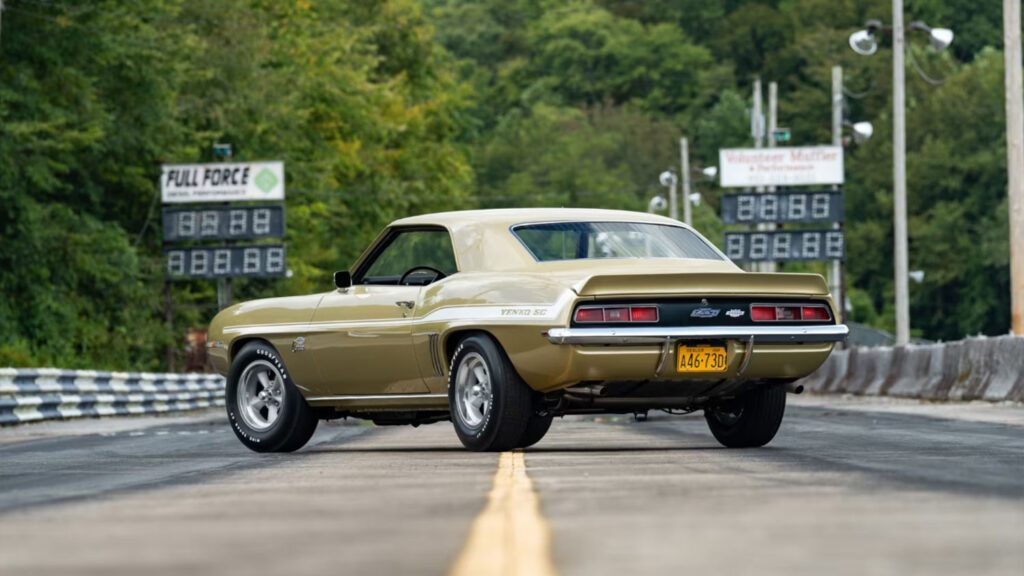
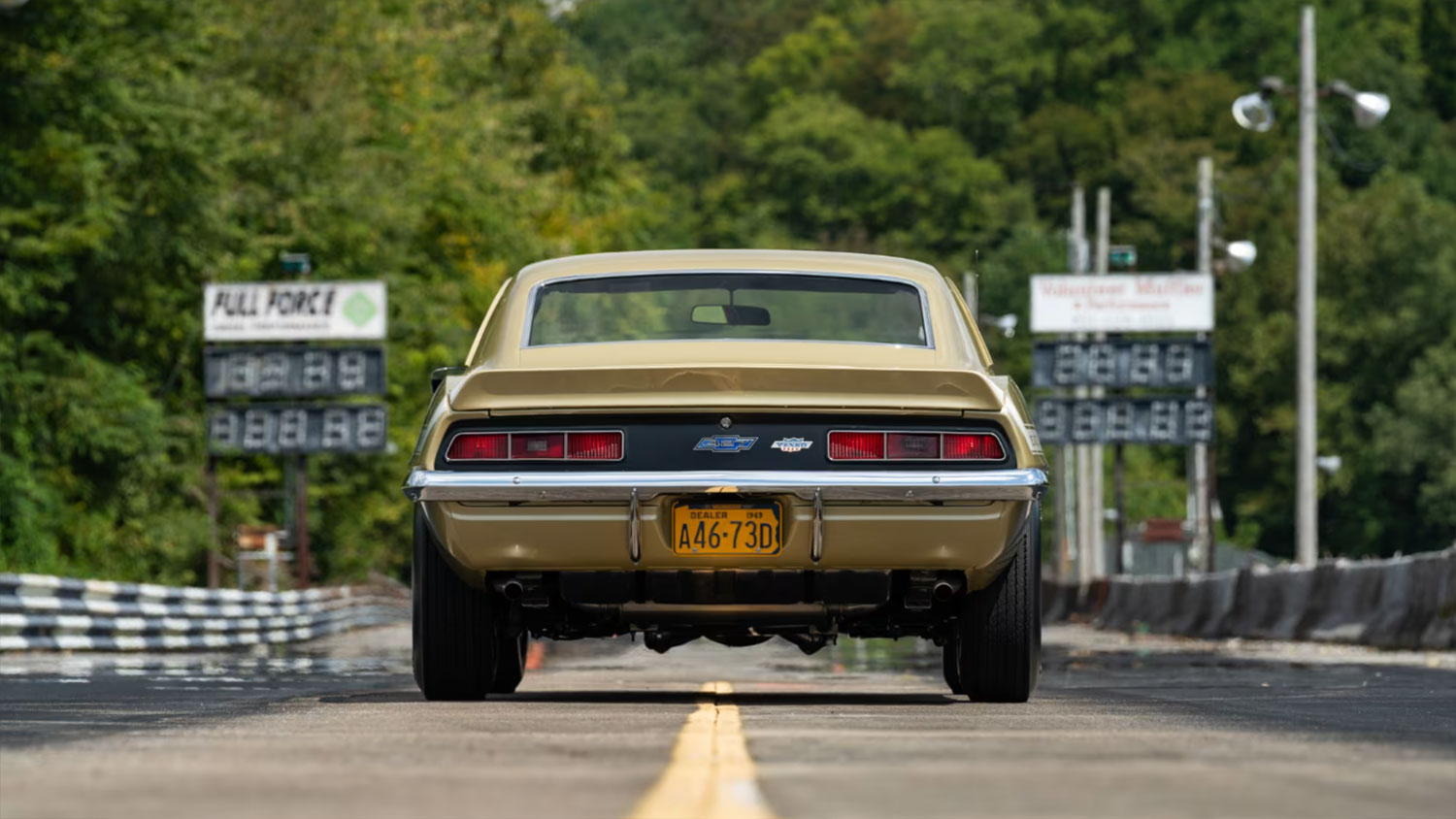
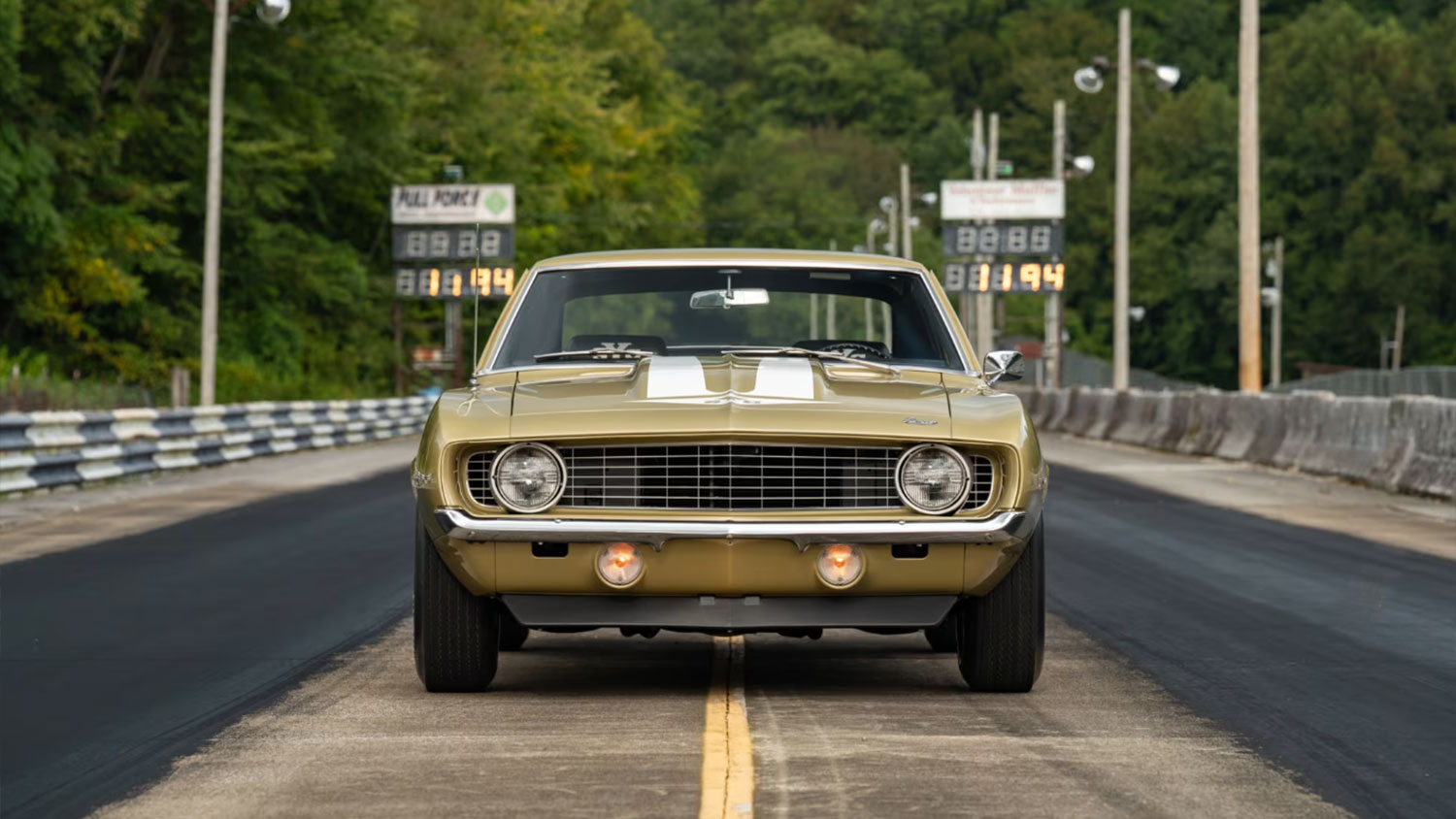
The car you’re looking at right here—finished in Olympic Gold—was the very first prototype. The pilot test mule. Ed Hedrick took this exact machine to the drag strip, dumped the clutch on skinny bias-ply tires, and ripped an 11.9-second pass. In 1969, that was spaceship speed.
Most Yenkos didn’t make it. Nineteen-year-old kids bought them, got sideways on a wet two-lane, and wrapped them around telephone poles. Others blew the bottom end out on Friday nights and got left to rot in weed patches behind rusty barns.
This gold pilot survived. And in January, it rolled across the auction block at Mecum Kissimmee. When the bidding war finally ended, the gavel slammed down at one million, eight hundred and fifteen thousand dollars.
The most expensive Chevrolet Camaro to ever exist on planet earth.
Nearly two million dollars for a car GM swore they would never build.
That’s why the Yenko name matters. It’s not about chrome, and it’s damn sure not about window stickers. It’s about the fact that fifty-seven years ago, a Pennsylvania mechanic with grease under his fingernails proved that a man with a wrench and an iron will can bend a multi-billion-dollar empire to his knees.
Drive it hard, or don’t drive it at all.”