In 1968, Chrysler stuffed a yellow slip of paper into the glovebox of eighty specific cars, warning the buyer that the machine carried no warranty and had no legal right to touch public asphalt.
That wasn’t sales bravado. It was corporate self-defense.
Detroit had spent five years dressing up muscle cars in showroom chrome and plush vinyl, pretending they were civilized machines built for a quiet evening cruise. But by the spring of ’68, the gloves were ripped off. Ford had taken a cleaver to the drag strips, and Highland Park decided to stop making nice and build an out-and-out ambush. The order came down like an iron fist: shoehorn the 426 Race Hemi into the featherweight Dodge Dart.
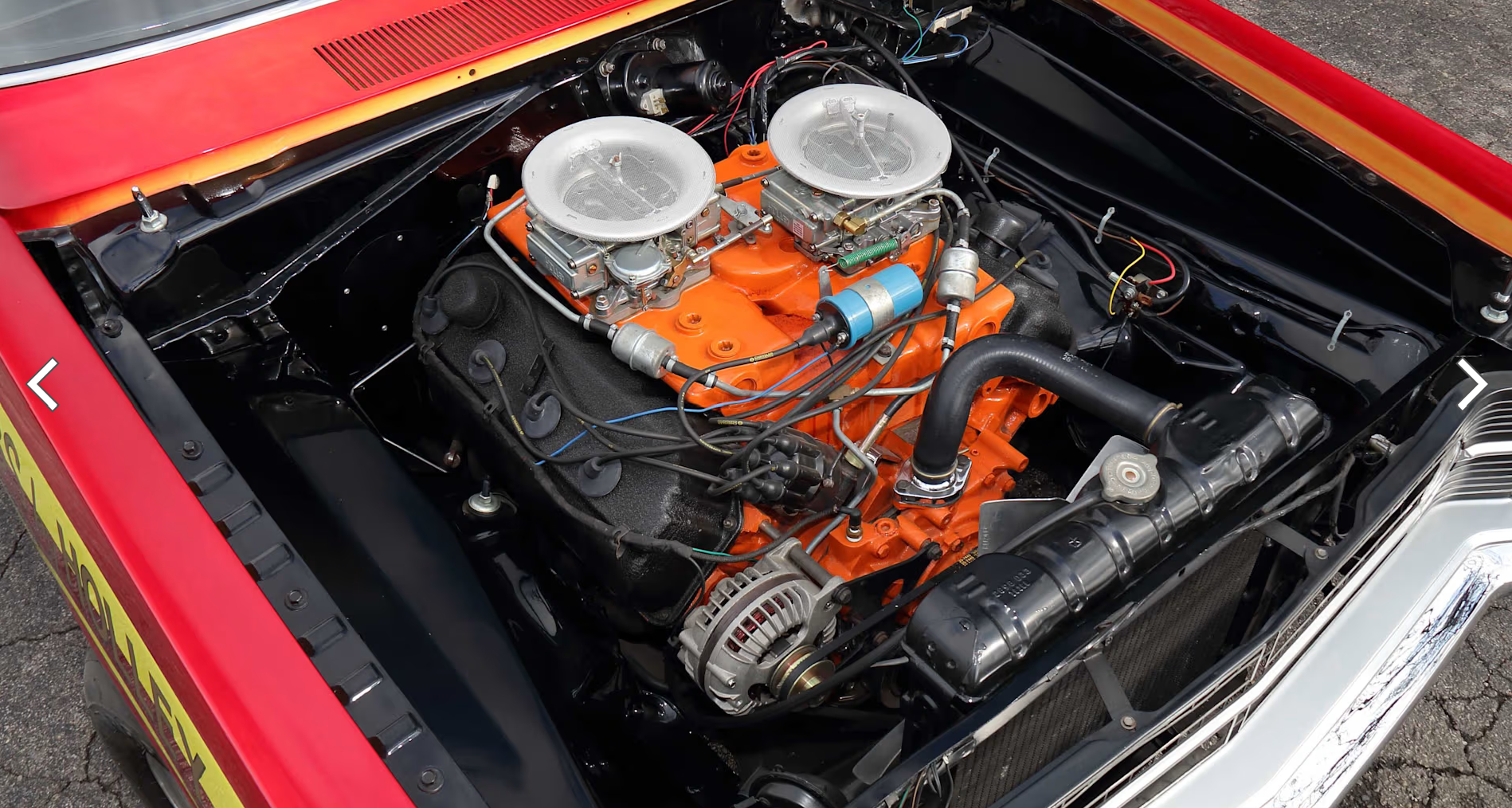
On a blueprint, it looked like simple mathematics. Down on the shop floor, it was an engineering fistfight. The Dart was an economy grocery-getter framed for skinny six-cylinders and supermarket parking lots. The Elephant was eight hundred pounds of brute iron with chrome rocker covers wide as breadboxes. It physically refused to fit. The inner fenders choked it, the steering gear jammed against the block, and the right-side valve cover mashed into the shock tower so tight you couldn’t pull a spark plug with a crowbar.
Chrysler couldn’t weld this mutant on an assembly line without grinding the factory to a dead halt. So they loaded bare-metal shells onto open flatbeds in the dead of winter and hauled them off into the dark to a nondescript shop in Madison Heights. Hurst Campbell.
The fabricators at Hurst didn’t mess around with clay models or polite engineering. Facing an impossible deadline before the NHRA Springnationals, they climbed straight into the engine bay with an eight-pound sledgehammer and battered that right-side shock tower until the steel dented back an inch to let the iron breathe. If you trace the sheet metal of a real LO23 today, you can still feel where that hammer hit. No two were ever quite the same.
Then they gutted the car down to the bone.
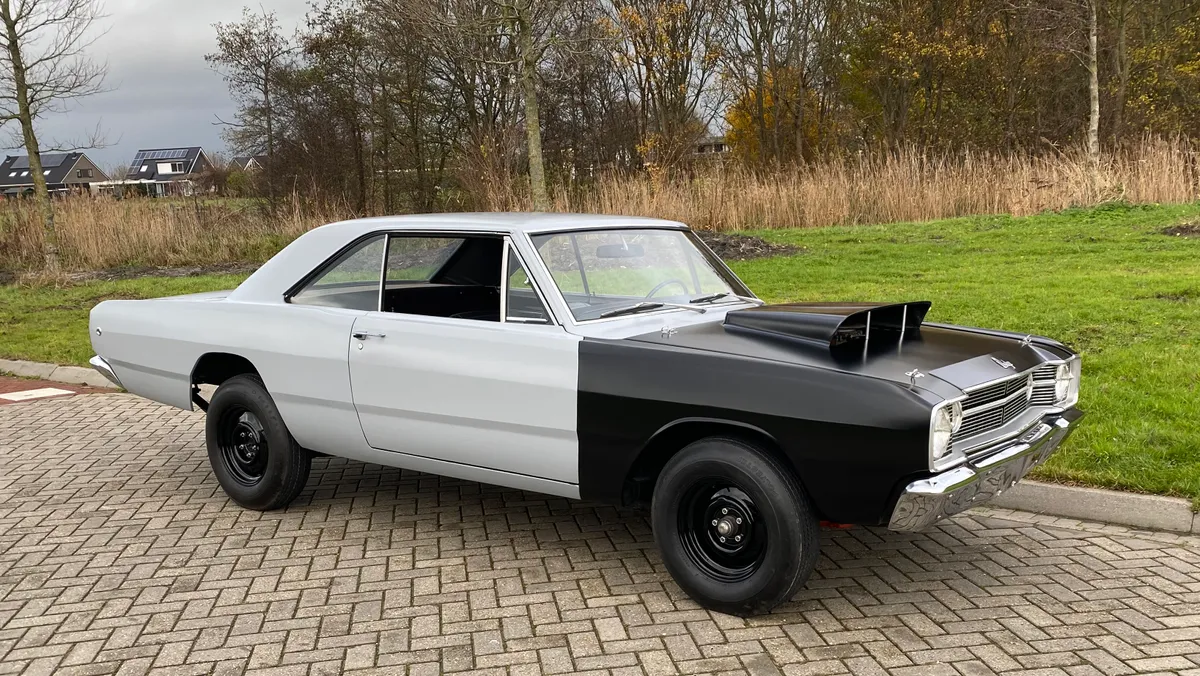
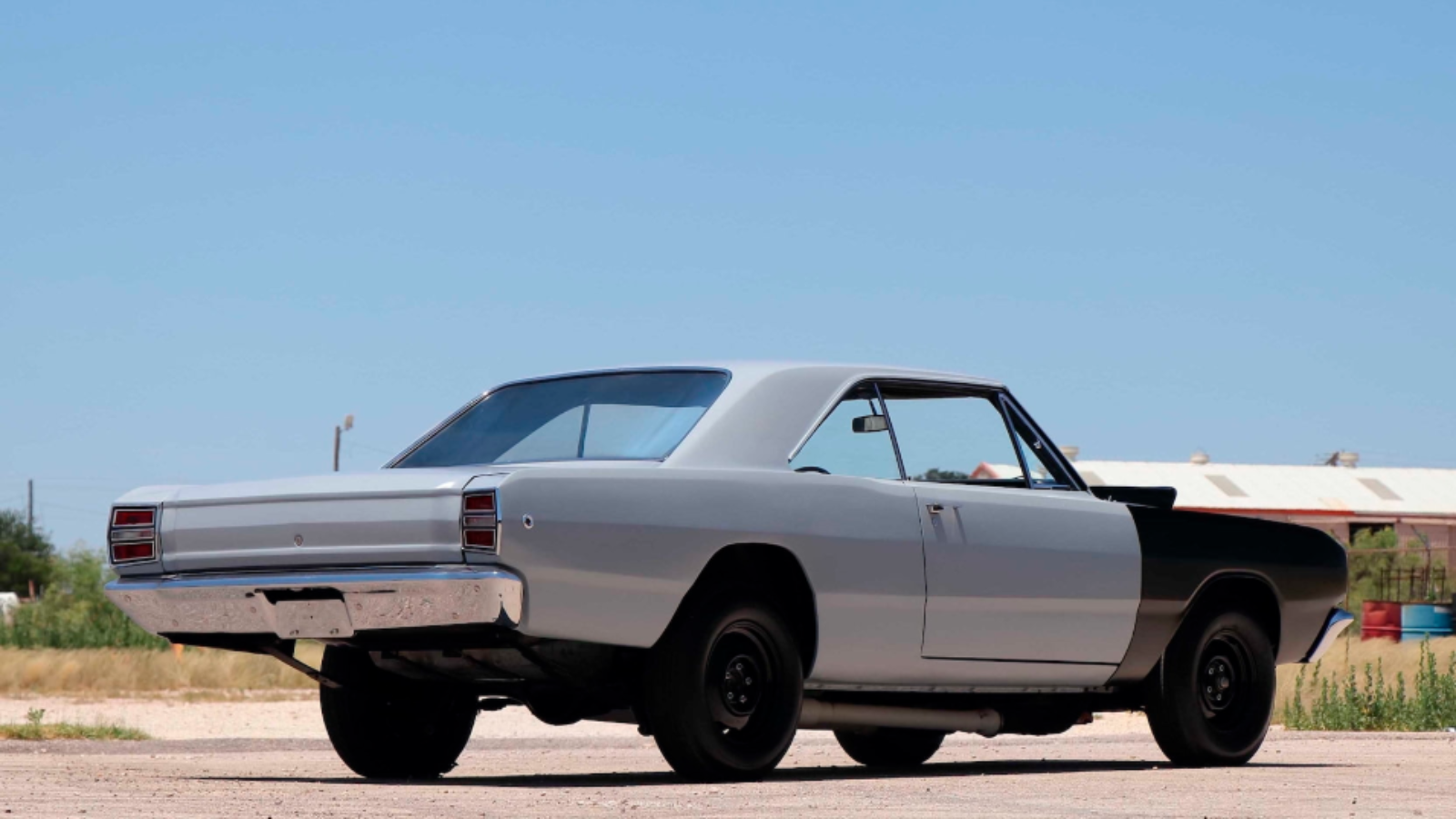
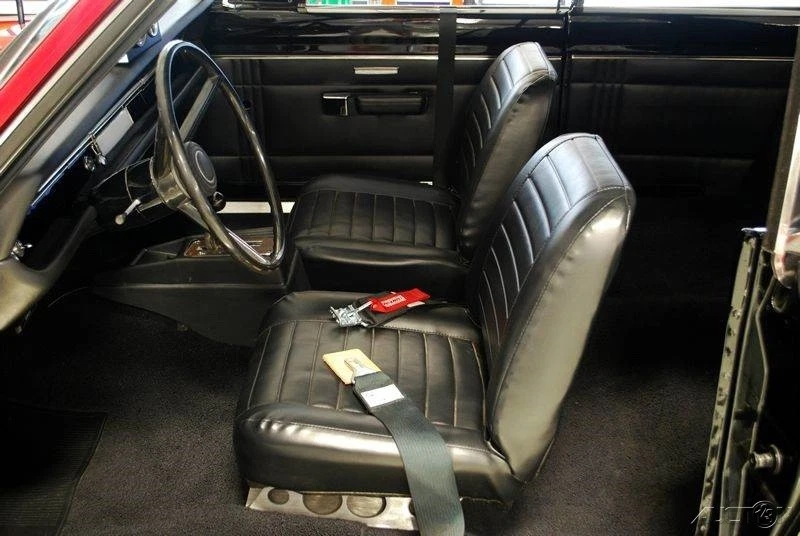
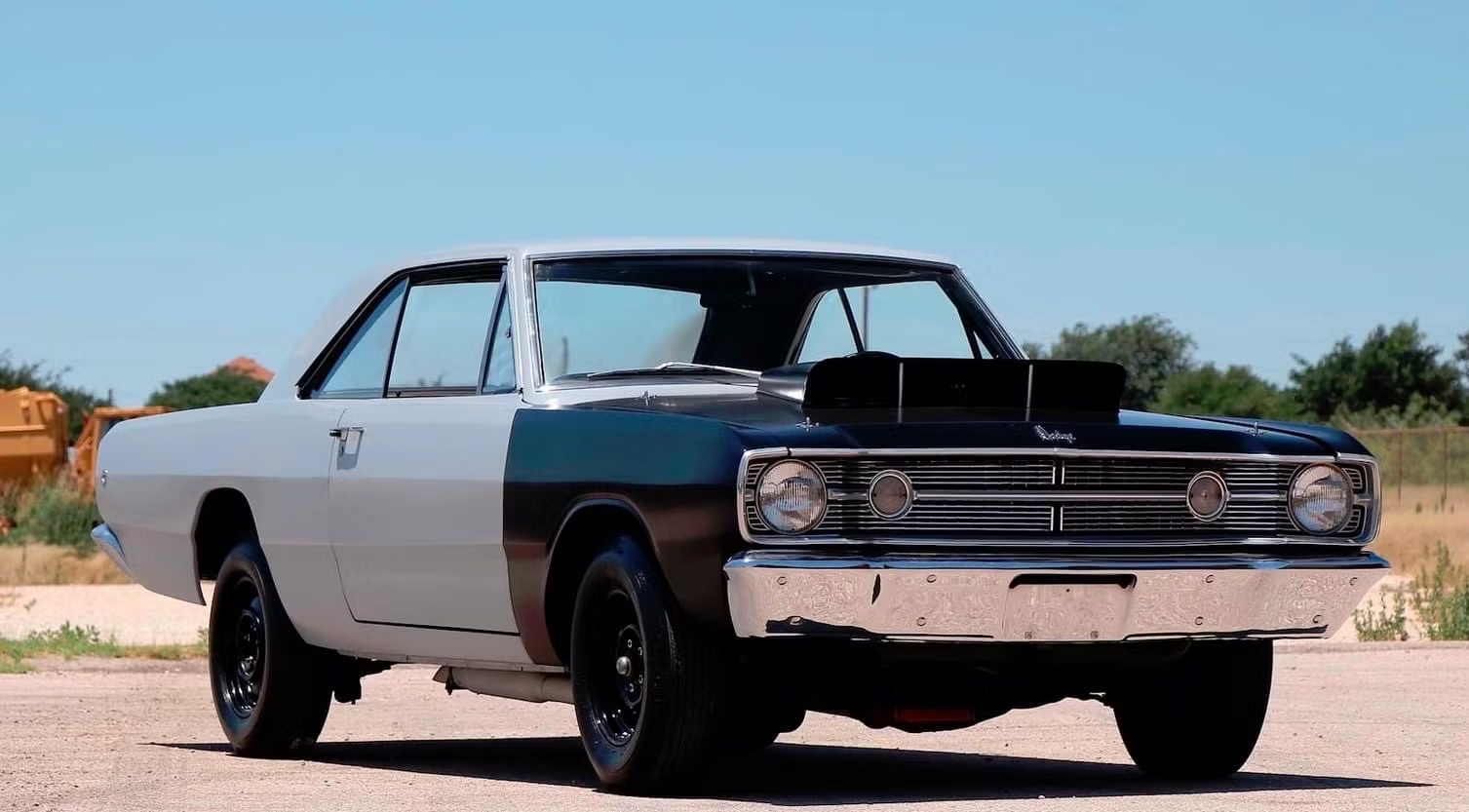
Steel front fenders and hoods were tossed onto the scrap heap, swapped out for raw, unpainted fiberglass that reeked of fresh resin and showed dark strands through the black gelcoat. They took the steel door skins and submerged them into vats of chemical acid, letting the solution chew through the gauge until the metal was paper-thin and flexed under your thumb. The heavy glass regulators were chucked into the scrap bins. In their place hung simple nylon seatbelt straps pulled up from the door wells and snapped onto a solitary button on the frame just to keep the weather out.
Inside, there was no back bench, no radio, no heater, and no carpet to soften the bare floorpan. Just two spartan, foam-padded buckets yanked straight out of an A100 delivery van, bolted to crude aluminum angle-iron because lateral support is useless when a car only travels in a violent straight line.
Up through the hood rose the real monster: an aluminum cross-ram intake manifold perched on top of the block, feeding dual Holley four-barrels set diagonal against each other like an open jaw. They stood so high that the builders had to hack a jagged rectangular opening right through the fiberglass and rivet on a crude, boxy hood scoop that looked like an oversized rural mailbox snatched off a country fence post.
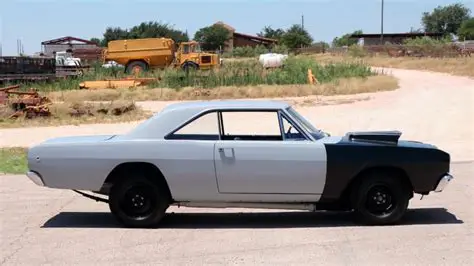
When the car rolled out of the shop doors into the Michigan gravel, it wore no gleaming factory paint. Just a coat of dull 999-spec gray primer and midnight-black steel rims that gave it the rough, unfinished look of a backyard drag project dragged straight out of an old barn, shivering with tension and smelling of scorched rubber, raw fiberglass resin, and high-octane racing fuel.
When the factory drivers uncorked the open zoomie headers at the strip, the car dipped straight into the ten-second bracket at over a hundred and thirty miles an hour on bias-ply slicks.
The ’68 Hemi Dart never won a beauty contest, and it never tried to be pretty. It became legendary because it was the moment the factory quit lying to itself—a raw, hammered-out missile built by greasy hands that didn’t care about comfort, only about making iron lethal.